

Over half of american travelers report feeling overwhelmed when planning a trip, according to recent surveys. Sorting through endless options and trying to get every detail right can turn a dream vacation into a stressful chore. Understanding the art of travel planning not only helps reduce anxiety but also lets you craft journeys that fit your needs, preferences, and budget. This guide reveals how to make smarter travel choices and avoid common mistakes for a smoother, more rewarding experience.
Defining Travel Planning and Its Purpose
Travel planning is a strategic process of organizing and preparing for a comprehensive journey, transforming potential travel chaos into a seamless, enjoyable experience. At its core, travel planning involves carefully designing an itinerary that aligns with personal preferences, budget constraints, and desired outcomes. Whether you’re mapping a weekend getaway or an extended international adventure, the fundamental goal remains consistent: crafting a structured approach that maximizes enjoyment while minimizing logistical stress.
The methodology of effective travel planning encompasses several critical components. Destination research serves as the foundational step, where travelers investigate potential locations, understand local cultures, and assess practical considerations like seasonal weather, transportation options, and accessibility. Seasoned travelers recognize that meticulous preparation can dramatically enhance the overall trip experience, turning potential challenges into opportunities for memorable moments. Learn more about creating personalized itineraries to elevate your travel strategy.
Key elements of comprehensive travel planning typically include:
- Defining clear travel objectives and expectations
- Researching destination-specific details and cultural nuances
- Establishing realistic budgetary parameters
- Selecting appropriate accommodations and transportation methods
- Creating flexible yet structured daily itineraries
- Anticipating potential logistical challenges and developing contingency strategies
Ultimately, travel planning transcends mere logistics. It represents a thoughtful approach to experiencing new environments, cultures, and personal adventures. By investing time in strategic preparation, travelers can transform ordinary trips into extraordinary journeys, ensuring each moment is intentionally crafted and deeply satisfying.
Types of Travel Planning Approaches
Travel planning encompasses diverse methodological approaches that cater to different traveler preferences and technological capabilities. Two primary paradigms have emerged in modern travel strategy: the behavioral approach and the technological approach, each offering unique insights into how individuals conceptualize and execute their travel experiences. These approaches reflect the evolving landscape of travel planning, where human psychology and technological innovation intersect to create more personalized and efficient journey design.
The behavioral approach to travel planning focuses intensely on understanding consumer decision-making processes. Researchers analyze how travelers select destinations, evaluate options, and make critical choices based on psychological factors like personal preferences, cultural backgrounds, and individual motivations. This approach recognizes that travel planning is not merely a logistical exercise but a complex cognitive process influenced by emotional and rational considerations. Learn more about personalized tour planning to understand how individual preferences shape travel strategies.
In contrast, the technological approach leverages advanced algorithms and digital tools to streamline travel planning. Modern systems utilize sophisticated techniques like:
- Optimization algorithms for route planning
- Machine learning models predicting traveler preferences
- Automated itinerary generation systems
- Real-time data integration for dynamic trip adjustments
- Predictive analytics for budget and time management
Ultimately, the most effective travel planning approach combines elements of both behavioral insights and technological capabilities. By understanding individual preferences while utilizing cutting-edge planning tools, travelers can create more personalized, efficient, and enjoyable travel experiences that balance spontaneity with strategic preparation.

Key Steps in Effective Travel Planning
Successful travel planning is a deliberate process that transforms potential chaos into a seamless, enjoyable experience. At its core, effective travel planning requires a strategic approach that balances meticulous preparation with flexible adaptability. Destination selection emerges as the critical first step, where travelers must carefully evaluate potential locations based on personal interests, seasonal considerations, and practical feasibility.
The planning process involves several interconnected stages that demand careful consideration and research. Goal setting becomes paramount, where travelers must define clear objectives for their journey. These goals might range from cultural exploration and relaxation to professional networking or adventure seeking. Learn more about curating the perfect travel itinerary to understand how to align your travel goals with practical planning strategies.
Key steps in effective travel planning typically include:
- Defining precise travel objectives and expectations
- Conducting comprehensive destination research
- Creating a realistic budget and financial plan
- Checking passport, visa, and travel documentation requirements
- Selecting appropriate accommodations
- Planning transportation logistics
- Developing a flexible yet structured daily itinerary
- Preparing for potential contingencies and travel disruptions
Advanced travel planning transcends mere logistical arrangements. It represents a holistic approach to crafting meaningful experiences, where strategic preparation meets personal aspiration. By investing time in thoughtful planning, travelers can transform ordinary trips into extraordinary journeys, ensuring each moment is intentionally designed and rich with potential for unexpected discovery and personal growth.
Comparing DIY vs. Concierge-Style Planning
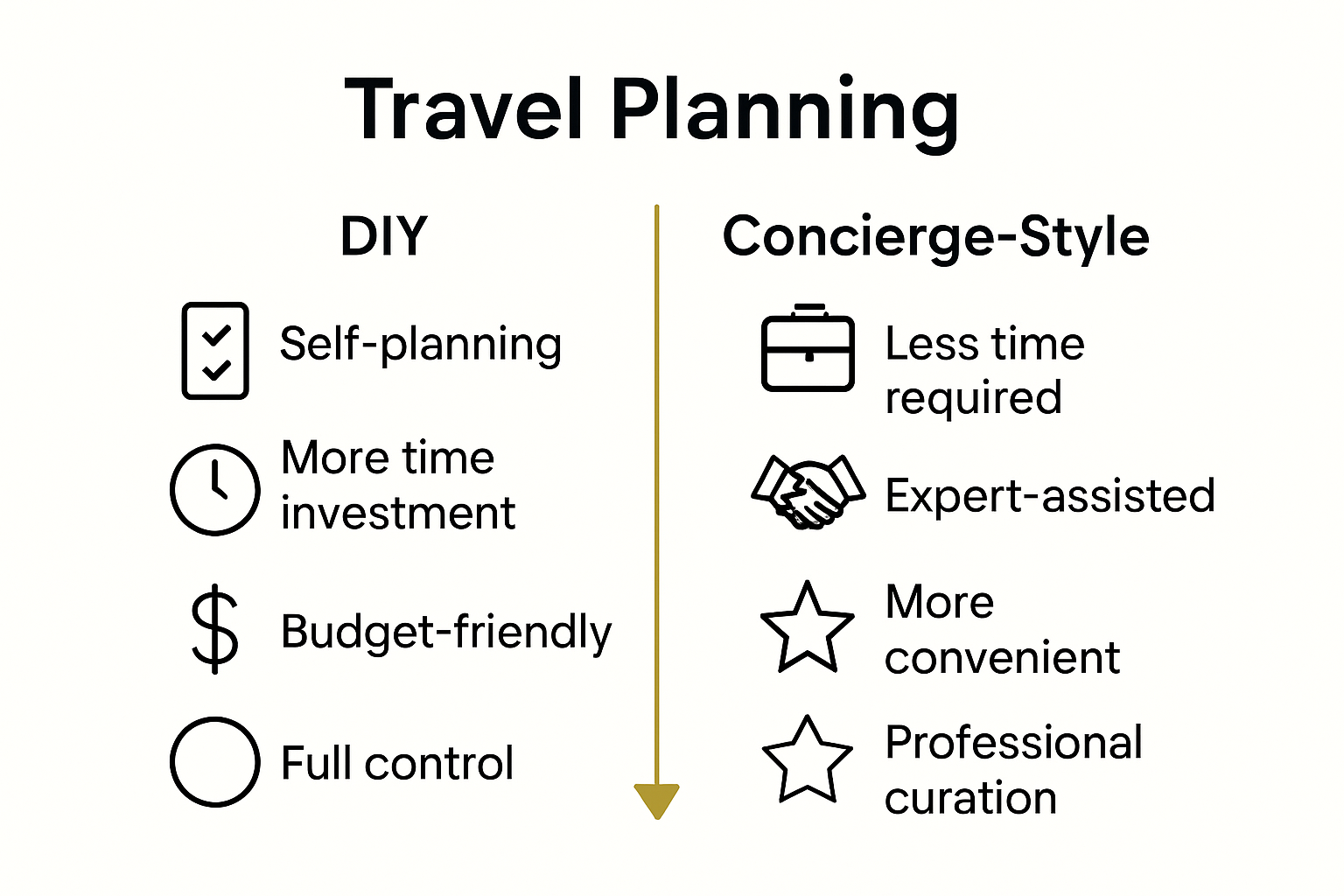
Travel planning presents travelers with two distinct approaches: the do-it-yourself (DIY) method and professional concierge-style planning. Each strategy offers unique advantages and challenges, catering to different traveler preferences, time constraints, and complexity of travel experiences. The fundamental distinction lies in the level of personal involvement, expertise, and customization travelers seek when designing their journeys.
The DIY approach empowers travelers with complete control and flexibility, allowing them to craft experiences precisely aligned with personal preferences and budget limitations. Social media and online resources have dramatically enhanced DIY planning capabilities, providing access to extensive destination information, traveler reviews, and booking platforms. Learn more about concierge-level planning strategies to understand the nuanced differences between self-guided and professional travel coordination.
Key comparative elements between DIY and Concierge-Style Planning include:
- Time Investment: DIY requires significant personal research; Concierge services minimize traveler effort
- Customization Level: DIY offers direct control; Concierge provides expert-curated experiences
- Cost Considerations: DIY can be more budget-friendly; Concierge services include professional fees
- Complexity Handling: DIY suits simple trips; Concierge excels with complex, multi-destination itineraries
- Risk Management: DIY demands personal problem-solving; Concierge offers professional contingency planning
- Local Knowledge: DIY relies on online research; Concierge provides insider, location-specific insights
Ultimately, the choice between DIY and concierge-style planning depends on individual travel goals, available time, budget, and desired experience complexity. While DIY planning offers personal satisfaction and potential cost savings, concierge services provide a stress-free, professionally curated journey that transforms travel from a logistical challenge into a seamless, memorable adventure.
Common Travel Planning Mistakes to Avoid
Travel planning is an intricate process fraught with potential pitfalls that can transform an anticipated adventure into a stressful experience. Strategic preparation requires more than casual research and wishful thinking. Travelers frequently underestimate the complexity of crafting a seamless journey, overlooking critical details that can derail even the most well-intentioned plans.
Budget miscalculation represents one of the most significant challenges in travel planning. Many travelers fail to account for hidden expenses, unexpected fees, and fluctuating currency exchange rates. Learn more about creating valuable travel itineraries to understand how professional planning can prevent financial surprises and optimize your travel budget.
The most common travel planning mistakes include:
- Inadequate destination research
- Unrealistic time management
- Overlooking visa and documentation requirements
- Failing to consider seasonal variations and local events
- Neglecting travel insurance
- Overloading itineraries with too many activities
- Ignoring personal energy levels and travel fatigue
- Not having backup plans for critical travel components
- Underestimating transportation logistics
- Overlooking cultural differences and local customs
Ultimately, successful travel planning demands a holistic approach that balances meticulous research, financial prudence, and personal flexibility. By anticipating potential challenges and building strategic contingencies, travelers can transform potential obstacles into opportunities for memorable, stress-free experiences that exceed expectations.
Simplify Your Travel Planning with Trinity Concierge
Travel planning can feel overwhelming with so many details to manage—from setting realistic budgets to navigating transportation logistics and making flexible, structured itineraries. The article highlights how strategic preparation and avoiding common mistakes are essential for an enjoyable trip. If you want to skip the stress of coordinating every step and instead focus on truly experiencing your destination Trinity Concierge offers the perfect solution. Our luxury guided tours in Austin transform complex planning into effortless enjoyment where every detail is curated with your preferences in mind.

Discover how our expert-curated experiences solve the very challenges described in the article by providing seamless logistics and insider access. By choosing Trinity Concierge you eliminate concerns about time management, transportation hassles, and itinerary overload. Embrace a travel style where comfort and culture meet expert planning. Start your journey with us today and see why our luxury tours reflect the best in curated itinerary creation. Ready to elevate your next trip Visit Trinity Concierge now and turn travel chaos into extraordinary memories.
Frequently Asked Questions
What is travel planning and why is it important?
Travel planning is the strategic process of organizing and preparing for a journey, focusing on creating an itinerary that maximizes enjoyment while minimizing logistical stress. It’s important because meticulous preparation can significantly enhance the travel experience, turning potential challenges into memorable moments.
What are the key components of effective travel planning?
Key components include defining clear travel objectives, conducting destination research, establishing a realistic budget, selecting accommodations and transportation, creating structured itineraries, and anticipating potential logistical challenges.
How do I choose between DIY and concierge-style travel planning?
Choosing between DIY and concierge-style planning depends on your travel goals, available time, budget, and desired complexity. DIY allows for direct control and customization, while concierge services offer expert guidance and minimize effort for complex itineraries.
What common mistakes should I avoid when planning my trip?
Common mistakes include inadequate destination research, unrealistic time management, overlooking visa requirements, and neglecting travel insurance. It’s essential to anticipate potential challenges and create a flexible plan to avoid stress during your travels.