
Over 80 percent of affluent couples turn to destination management for luxury American travel experiences that go far beyond basic tourism. When your valuable time in Austin is limited, every moment matters. Curated guidance helps you unlock the city’s top dining and vibrant culture with personalized service, so you avoid the guesswork and maximize your getaway. Discover how strategic planning transforms your visit into an extraordinary journey tailored for discerning travelers.
Core Concepts of Destination Management
Destination management represents a sophisticated strategic approach that transforms geographic locations into cohesive, compelling travel experiences. At its core, this discipline involves the comprehensive coordination of tourism resources, stakeholder interactions, and strategic planning to create memorable visitor journeys. Destination management goes far beyond simple marketing, encompassing a holistic system that integrates economic development, cultural preservation, infrastructure planning, and visitor experience optimization.
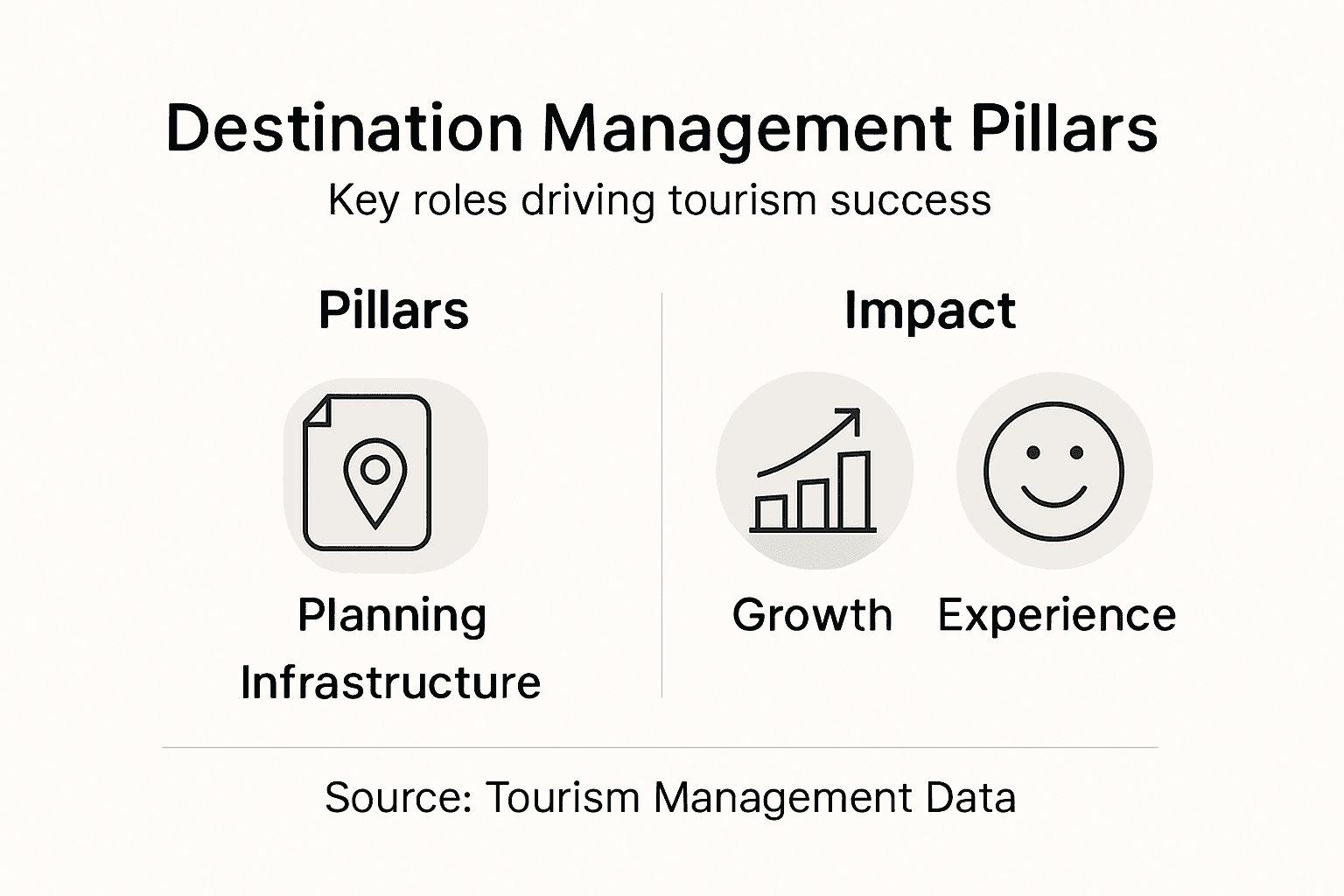
The fundamental framework of destination management centers on three critical pillars: governance, stakeholder collaboration, and sustainable development. Strategic coordination requires multiple sectors to work harmoniously – including local governments, tourism boards, private businesses, and community representatives. Each stakeholder plays a unique role in crafting an integrated destination strategy that balances visitor expectations with community interests.
Key elements of effective destination management include:
- Comprehensive destination planning
- Infrastructure development
- Economic impact assessment
- Cultural preservation strategies
- Visitor experience enhancement
- Sustainability initiatives
Successful destination management transforms geographic spaces into dynamic, attractive environments that provide exceptional experiences while maintaining local authenticity. The approach requires continuous adaptation, leveraging data-driven insights to anticipate traveler preferences and respond to evolving market dynamics.

Here’s a summary of how major pillars contribute to effective destination management:
| Pillar | Main Role | Impact on Tourism |
|---|---|---|
| Governance | Sets strategic direction and policy | Ensures long-term stability |
| Stakeholder Collaboration | Builds partnerships across sectors | Increases project success rates |
| Sustainable Development | Minimizes environmental footprint | Attracts responsible travelers |
Pro tip: Consider developing a collaborative destination management framework that includes regular stakeholder meetings and transparent communication channels to ensure coordinated strategic development.
Types and Providers of Destination Management
Destination management organizations (DMOs) represent a diverse ecosystem of governance models that strategically coordinate tourism development across multiple institutional frameworks. Logistics planning plays a critical role in determining the most effective organizational structure for destination management, which can range from public agencies to intricate public-private partnerships.
Types of Destination Management Organizations include:
- Government Tourism Boards
- Regional Tourism Agencies
- Public-Private Hybrid Organizations
- Community-Based Tourism Councils
- Private Tourism Management Companies
- Nonprofit Destination Development Entities
These organizations operate through distinct governance models that reflect local economic, cultural, and strategic priorities. Some focus exclusively on marketing, while others engage in comprehensive destination development, infrastructure planning, and stakeholder engagement. The most sophisticated DMOs integrate multiple functions, serving as strategic leaders who coordinate complex tourism ecosystems.
Below is a comparison of destination management organization types and their key strengths:
| DMO Type | Typical Focus | Example Strength |
|---|---|---|
| Government Tourism Board | Policy & regulation | Stable funding, broad reach |
| Public-Private Hybrid Organization | Strategic initiatives | Flexible, innovative coordination |
| Community-Based Council | Local engagement | Deep local knowledge |
Successful destination management providers distinguish themselves through their ability to balance economic objectives with community interests, cultural preservation, and sustainable development. They leverage data-driven insights, technological innovations, and collaborative frameworks to create dynamic, resilient tourism environments that adapt to changing traveler preferences and global market dynamics.
Pro tip: Develop a comprehensive stakeholder mapping strategy that identifies and engages all potential tourism ecosystem participants to create more holistic and integrated destination management approaches.
Essential Services: How Destination Management Works
Destination management encompasses a comprehensive suite of strategic services designed to transform geographic locations into seamless, compelling visitor experiences. Concierge services play a critical role in coordinating these multifaceted operational frameworks, ensuring that every aspect of destination development remains interconnected and purposeful.
Essential Services provided by destination management include:
- Strategic Tourism Planning
- Infrastructure Development
- Stakeholder Coordination
- Visitor Experience Design
- Marketing and Promotion
- Sustainability Management
- Performance Monitoring and Analysis
The operational mechanics of destination management revolve around intricate collaboration across multiple sectors. These organizations leverage advanced tools like customer journey mapping, value chain analysis, and data-driven performance metrics to optimize visitor satisfaction and destination competitiveness. By integrating public and private sector perspectives, destination management creates holistic strategies that balance economic growth with community interests and environmental preservation.
Successful destination management requires a dynamic, adaptive approach that responds to evolving traveler preferences, technological innovations, and global market trends. Sophisticated destination management teams continuously assess economic impacts, cultural implications, and sustainability indicators to refine their strategic approaches, ensuring destinations remain vibrant, competitive, and resilient in an increasingly complex global tourism landscape.
Pro tip: Implement a comprehensive stakeholder communication platform that facilitates real-time information sharing and collaborative decision-making across different destination management sectors.
Benefits for Luxury Travelers and Groups
Destination management transforms luxury travel experiences by providing meticulously curated, personalized journeys that transcend traditional tourism models. High-end group travel represents a sophisticated approach to exploring destinations, where every detail is carefully orchestrated to deliver exceptional, seamless experiences that cater to discerning travelers’ most refined preferences.
Key Benefits for Luxury Travelers and Groups include:
- Personalized Itinerary Design
- Exclusive Access to Unique Experiences
- Streamlined Logistical Coordination
- Premium Stakeholder Connections
- Cultural Immersion Opportunities
- Enhanced Safety and Comfort
- Tailored Accommodation Arrangements
The strategic approach of destination management allows luxury travelers to bypass conventional travel limitations, offering curated experiences that blend insider knowledge, cultural authenticity, and sophisticated service delivery. By integrating advanced technological tools, deep local connections, and comprehensive planning frameworks, destination management organizations create transformative travel experiences that go beyond simple tourism, delivering meaningful, memorable journeys that reflect travelers’ individual preferences and aspirations.
Luxury group travelers benefit from destination management’s ability to synchronize complex travel requirements, ensuring smooth interactions between transportation, accommodations, dining, and cultural experiences. These carefully crafted journeys eliminate logistical challenges, allowing travelers to focus entirely on enjoying immersive, high-quality experiences that reveal the unique character of each destination while maintaining the highest standards of comfort and personalization.
Pro tip: Request a comprehensive pre-travel consultation that maps your group’s specific interests, allowing destination management professionals to design a truly personalized travel experience.
Risks, Costs, and Common Pitfalls
Destination management involves complex strategic challenges that can significantly impact tourism development and destination sustainability. Concierge services in corporate events underscore the critical importance of understanding potential risks and mitigating operational vulnerabilities before they escalate into larger systemic problems.
Primary Risks and Potential Pitfalls include:
- Fragmented Governance Structures
- Ineffective Stakeholder Collaboration
- Resource Allocation Inefficiencies
- Unsustainable Tourism Practices
- Overtourism Challenges
- Cultural Authenticity Erosion
- Environmental Degradation Potential
- Policy Implementation Gaps
Financial risks in destination management stem from complex multisector coordination challenges that can lead to substantial economic inefficiencies. Organizations must invest significant resources in infrastructure development, marketing strategies, capacity building, and continuous monitoring systems. These investments require sophisticated financial planning and adaptive management approaches to ensure sustainable destination competitiveness and long-term economic viability.
Successful risk mitigation demands a proactive, integrated approach that balances economic objectives with environmental and social considerations. Destination management teams must develop resilient governance frameworks, implement comprehensive monitoring mechanisms, and foster transparent communication channels across multiple stakeholder groups. This holistic strategy helps prevent potential operational breakdowns, minimizes resource waste, and creates more responsive, adaptive tourism ecosystems that can navigate increasingly complex global travel landscapes.
Pro tip: Develop a comprehensive risk assessment matrix that continuously tracks potential operational vulnerabilities and creates adaptive strategic responses before challenges become critical.
Experience Destination Management in Action with Trinity Concierge
Destination management requires expert coordination to overcome challenges like logistic complexities and fragmented stakeholder collaboration. As highlighted in the article, delivering seamless, personalized traveler experiences while balancing local culture and sustainability goals can be difficult without a clear strategic framework. Trinity Concierge solves these pain points by providing meticulously planned luxury tours that handle every detail from curated itineraries to stress-free transportation.
Enjoy the benefits of destination management firsthand with our high-end motorcoach tours where comfort, convenience, and authentic cultural immersion come together. Whether you want exclusive access to Austin’s hidden gems or streamlined logistics for group travel, our team ensures your journey is smooth, safe, and unforgettable. Discover how our expert approach transforms an ordinary day into an extraordinary experience by visiting Trinity Concierge and explore how our carefully designed luxury tours put strategic destination management principles into practice.
Ready to relax and fully enjoy Austin without worrying about parking or planning logistics Explore Trinity Concierge today.

Frequently Asked Questions
What is destination management?
Destination management is a strategic approach that coordinates tourism resources, stakeholder interactions, and planning efforts to create compelling travel experiences. It combines elements of governance, stakeholder collaboration, and sustainable development to optimize visitor journeys and community interests.
Why is stakeholder collaboration important in destination management?
Stakeholder collaboration is essential in destination management because it builds partnerships across local governments, tourism boards, and private businesses. Effective collaboration ensures that the diverse interests of all parties are represented, leading to successful project outcomes and a balanced tourism strategy.
What are the key components of effective destination management?
Effective destination management includes comprehensive destination planning, infrastructure development, economic impact assessments, cultural preservation strategies, visitor experience enhancement, and sustainability initiatives. These components work together to create attractive and competitive tourism environments.
How does destination management benefit luxury travelers?
Destination management benefits luxury travelers by providing personalized itineraries, exclusive access to unique experiences, and seamless logistical coordination. It enables tailored travel experiences that focus on cultural immersion, enhanced safety, and high-quality service delivery.
Recommended
- The Essential Guide to Concierge Services in Corporate Events | Trinity Concierge
- Role of Concierge in Travel: Complete Guide | Trinity Concierge
- Role of Itinerary Planning – Elevating Luxury Travel | Trinity Concierge
- Logistics Planning in Tours: Elevating Luxury Experiences | Trinity Concierge
- Understanding the Role of Project Management in Success – Optio Station: Best Project Management App for Prioritization